
The first mistake investors can make with SpaceX is thinking the payday happened all at once.
It didn’t.
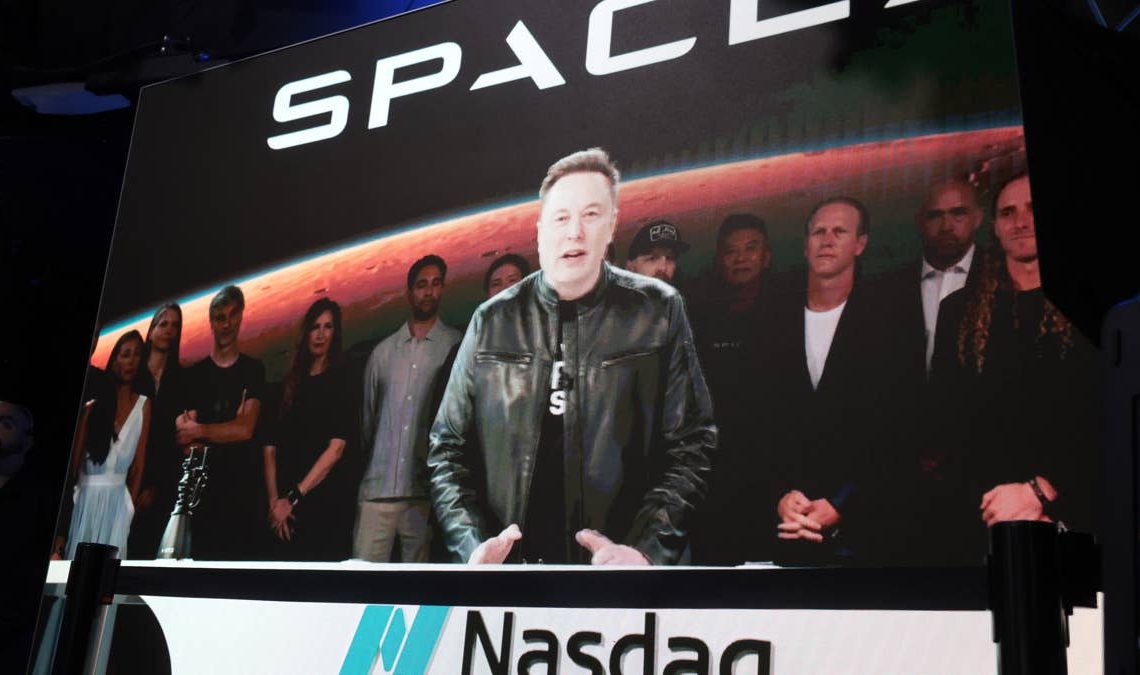
SpaceX’s initial public offering gave retail investors a rare chance to invest in Elon Musk’s rocket, satellite and artificial intelligence enterprise. But for the company’s first believers, the IPO didn’t mark the beginning. It was the end of a bet that had demanded years of patience, illiquidity, and faith in a business plan that had once seemed practically unachievable.
SpaceX (SPCX) set its record IPO price of $135 a share, raising $75 billion from the sale of 555.6 million shares. Reuters said the IPO valued the company at about $1.75 trillion before shares began trading. The stock rose 19% in its Nasdaq debut, finishing at $160.95 and bringing SpaceX’s market cap above $2 trillion, Reuters reported.
That made for a huge payoff for early investors, employees and venture firms.
But it also taught a crucial lesson to everyone else: By the time a world-changing enterprise becomes evident, a lot of the biggest money has already been made.
SpaceX IPO shows why early risk can pay off
SpaceX didn’t reach a trillion-dollar valuation because investors suddenly discovered rockets.
The innovative startup spent years creating a position in space launches, Starlink satellite internet and, after its merger with xAI, artificial intelligence. SpaceX’s IPO pitch was based on businesses that still need considerable execution, such as Mars missions and AI data centers in orbit, Reuters said.
That’s why the early investor’s reward is so remarkable.
Founders Fund first invested in SpaceX in 2008, to the tune of $20 million, Fortune reported.
DFJ Growth made an initial $10 million investment in 2009 and has spent more than $800 million to date. Sequoia’s investment was upwards of $2 billion across funds, while Valor Equity Partners’ stake might be more than $90 billion.
Related: Dan Ives spills the beans on SpaceX future
Those stats are simple to admire in retrospect.
It was harder to underwrite when SpaceX was private, less proven, and not available to most regular investors. Early backers didn’t buy the clean earnings story. They were buying execution risk, regulatory risk, launch risk, founder risk and years of no easy liquidity.
That is the trade-off that investors tend to ignore.
Public investors typically have more disclosure and greater liquidity. Private investors may have more upside, but that’s only because they accept the risk before the market believes that the narrative is legitimate.
“When you’re the most anticipated IPO ever, you can ask investors to adapt to your process rather than the other way around,” former Bank of America capital markets executive Craig Coben said, according to Reuters.
SpaceX stock still comes with a valuation warning
The pop on its first day made SpaceX look like an instant winner in the public market.
That doesn’t mean the stock is inherently inexpensive.
In 2025, SpaceX reported $18.7 billion in sales and a $4.9 billion net loss, according to Via Satellite’s assessment of SpaceX’s S-1 form. Starlink accounted for $11.4 billion of that revenue, or almost 61% of the company’s total revenues. SpaceX also had long-term debt of $29.1 billion at the end of March 2026.
More Tech Stocks:
- Morgan Stanley sets jaw-dropping Micron price target after event
- Nvidia’s China chip problem isn’t what most investors think
- Quantum Computing makes $110 million move nobody saw coming
That makes the investor lesson more complicated than “buy visionary founders.”
It’s become very challenging to assess SpaceX on a price-to-earnings ratio, since it lost money in 2025. It also noted that SpaceX was trading at around 93.7 times trailing revenue on a $1.75 trillion valuation, an expensive multiple, even in a market prepared to reward dominant growth tales.
Eventually, SpaceX might justify that price.
It has reusable rockets, Starlink scale, a big brand, and a founder with a lengthy history of persuading markets to accept ambitious claims seriously. Starlink subscribers had risen from 2.3 million in 2023 to 8.9 million in 2025, and the corporation said it had 10.3 million subscribers at the end of March 2026.
Spencer Platt / Getty Images
SpaceX gives investors a timeless IPO lesson
This scenario explains why IPOs generate so much emotion.
IPOs give investors access to companies that many investors have been watching from the outside for years. SpaceX is an extreme case of that dynamic. Institutional investors, employees and early venture backers had been in on the tale for years, while retail investors got a disproportionate piece of it, Reuters said.
The difference counts.
The first SpaceX investors were compensated for believing before the evidence emerged. The proof was in the pudding, and public investors are paying. Both groups aren’t necessarily incorrect, but they are betting extremely differently.
Key takeaways from the SpaceX IPO
- SpaceX raised $75 billion in a record IPO and initially valued the company near $1.75 trillion, Reuters confirmed.
- Shares closed up 19% in their first Nasdaq session, pushing the company above $2 trillion in market value, Reuters noted.
- Early investors won because they accepted years of private-market risk, not because they bought a popular ticker on debut day.
- Public investors still need to weigh SpaceX’s growth potential against losses, debt, valuation, and governance risk.
The cleaner lesson for long-term investors is not to chase every hot IPO.
The problem is that the biggest rewards sometimes come from owning excellent enterprises before everyone agrees they are terrific. That happens in private markets, but it happens in public markets, too, when investors buy great companies during periods of doubt.
Those early backers of SpaceX got the rarest variant of that result.
They embraced uncertainty when the company was still demonstrating reusable rockets, creating Starlink, and asking investors to believe in markets that didn’t yet exist. The profit was enormous, but so was the risk.
For everyone else, the SpaceX IPO is a reminder that investing is about more than spotting a huge story. It is about knowing where you are entering that story.
Early believers get paid for fear.
Late buyers pay for confidence.
Related: Morningstar drops bombshell message on SpaceX IPO