
A founder-CEO of an all-important global AI company, with a rockstar persona, admits to an affair with an alleged spy.
He is made to resign with the whole world watching and many powerful people rooting for his return, while waxing eloquent about why he is indispensable and irreplaceable.
A significant section of employees, at least a fourth of the workforce, feel wronged on his behalf, showing where their loyalties lie.
Many Shareholders want him back while the stock is in steady decline
It is in these evidently hostile conditions that a senior woman executive has been brought in to steady the ship while the company looks for a permanent successor.
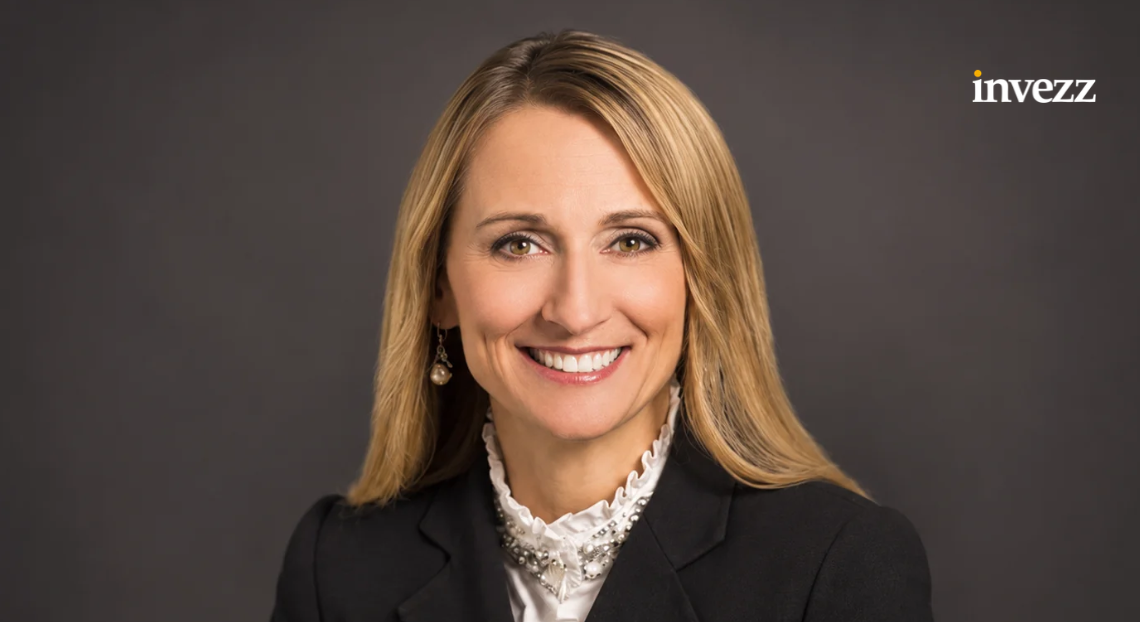
Nvidia CFO Colette Kress’s appointment as interim chief of a company seen as the linchpin of the global AI boom is among the toughest jobs in the world right now.
It has also reignited the debate around the glass cliff phenomenon.
What is the glass cliff?
The term describes the widespread practice of preferentially appointing women or other minority employees to leadership positions in times of crisis, when the chances of failure are highest.
That makes it even harder for them to perform, eventually reinforcing the perception that women cannot lead.
It was coined by British academics Michelle Ryan and Alex Haslam, who in 2004 published an extensive study of FTSE 100 companies and found that women tended to be appointed to lead failing organisations.
A pattern that runs through history
Examples abound.
Marissa Mayer became Yahoo’s CEO in 2012, when the internet major had lost substantial market share and was struggling with focus and innovation.
She was its fifth CEO in five years, a sign of how volatile the company was.
Ellen Pao at Reddit, Roz Brewer at Walgreens Boots, even Theresa May becoming UK prime minister right after Brexit: all are telltale signs of the insidious phenomenon.
In a study conducted by Alison Cook, professor of management at the Jon M Huntsman School of Business at Utah State University, and her colleague Christy Glass, professor at the university’s school of social sciences, the researchers found that in US college men’s basketball, coaches from racial minorities were more likely than white coaches to be promoted to losing teams.
In 2013, the duo analysed CEO transitions in Fortune 500 companies over 15 years.
They found that occupational minorities, defined as white women and men and women of colour, were more likely than white men to be promoted CEO of weakly performing firms.
They also found that when performance declined under occupational minority CEOs, these leaders were likely to be replaced by white men, a pattern they termed the “savior effect.”
Does Nvidia fit the picture?
Invezz asked Cook whether Kress’s appointment amounts to a glass cliff, given that Nvidia is doing exceptionally well financially and has strong prospects.
“The glass cliff isn’t only about weak performance. It’s about being appointed to a precarious situation,” Cook told Invezz.
“In my work with Dr. Christy Glass, we’ve treated firms facing a scandal, including the firing of the previous CEO, or going through major restructuring as glass cliff situations too. Nvidia fits that picture. Kress is stepping in during a national security investigation, several lawsuits, and a permanent CEO search that may not pick her,” she said.
Cook spells out the challenges Kress faces and the conditions she is leading under, which make this a compelling case of the phenomenon.
“First, the scrutiny will be enormous. Nvidia is one of the most visible companies in the world, and every decision she makes will be watched and second-guessed. Second, her authority may be challenged. She is leading while there is a very public push to bring her predecessor back, which can make it hard for anyone to lead with full support. Third, the reputational risk falls on her.”
“She is now the face of the company during a crisis she didn’t create, and if things go badly, she may be the one who wears it. So while the business itself is strong, the circumstances around her appointment fit the glass cliff mould,” she said.
Why organisations turn to women in a crisis
Sophie Williams, former global manager of production planning at Netflix, and author of The Glass Cliff: Why Women in Power Are Undermined – And How to Fight Back, has explained why organisations turn to women in moments of crisis.
“There’s a perception that when a team has gone through a hard time, what we are looking for suddenly becomes someone to make us feel better. Someone to play office mum, someone to soothe those experiences and those team members. And not necessarily make transformational change, as they say, but to just make people feel better in that experience,” she said in an earlier interview with Harvard Business Review.
“But because we are not bringing these women in with expectation of transformational changemaking, even when they are capable of it, it means that we don’t often give them either the tools or the time that are necessary to turn that perceived failure into a success before they’re exited. And so we see female leaders being 24% more likely to be fired than their male counterparts. We also see them having significantly shorter tenures in role once they are there,” she said.
The “office adult” label
Bloomberg columnist Beth Kowitt makes a similar point: “If the default for men in tech is charismatic genius, for senior women it is still way too often the office adult.”
Kowitt notes that Sheryl Sandberg, as chief operating officer at Meta Platforms Inc., played the “polished grownup” to counterbalance Mark Zuckerberg’s “hoodie-wearing, college-dropout persona.”
Linda Yaccarino, as CEO of X, had to “clean up the mess left in the wake of Elon Musk.”
The label, she says, implies “a certain kind of executive; one who ensures everyone is well-behaved and on schedule, who brings stability and credibility — but not necessarily big vision.”
“For a generation of women, that may have been the only way in the door,” she says, drawing a comparison with Kress.
Reports that Huang called Kress a “deer in the headlights”, a ‘reporting CEO’ who could not help him set strategy, have already set a lens through which to view her: as a second fiddle, not thought of much by the rockstar founder-CEO.
To be sure, as Kowitt points out, Kress was hired after Huang interviewed 22 candidates, and said he wanted her to be CFO “for as long as we shall live.”
Kress to run two of the company’s most important jobs
Those who see Kress’s appointment as a glass cliff also point out that she must now run the two most important functions at the company, a daunting task despite Kress’ credentials and expertise.
Nvidia is the unofficial financier of the AI boom, spreading its vast cash piles as investments in budding AI startups, including OpenAI and Anthropic, and in ecosystem players such as neoclouds like CoreWeave.
Her role as CFO is therefore far from that of a mere bean counter.
Kress is a seasoned executive. She has spent 13 years at Nvidia, after nearly 25 years in finance roles at major technology companies such as Cisco, Microsoft and Texas Instruments.
Even so, does holding both jobs set her up to fail?
“I wouldn’t call holding both roles a set-up on its own. Interim CEOs who keep their CFO role aren’t unheard of,” Cook said.
She pointed to HP, which in 2010 named Cathie Lesjak interim CEO in addition to her CFO role after Mark Hurd left.
Lesjak served about three months before the board went outside for its next CEO.
“What concerns me more is authority and support. My work with Dr. Christy Glass found that women CEOs often lack the support or authority to accomplish their strategic goals,” she said.
More recently, Cook said, her research with Glass and Dr Alicia Ingersoll found that women CEOs have shorter tenures than men and are more likely to be dismissed involuntarily.
The gap widens when women are appointed during weak organisational performance.
Authority, loyalty and credit
On the earnings call this week, the board ruled out bringing Huang back, after a massive campaign for his reinstatement backed by shareholders, former and current employees, and supporters including Elon Musk and US President Donald Trump.
But the decision alone will not quickly change sentiment.
Cook also points out that Huang’s family remains inside the company.
His daughter, Madison Huang, holds a senior role, and his son and son-in-law are in leadership positions too.
“If coalitions form around his return, or people simply fail to support her, she is leading without full authority,” she said.
Finally, Cook turns to the financing question.
“Sources describe Kress as potentially more conservative than Huang, and she has sometimes pushed back on deals he championed. If she pulls back and growth slows, she may get the blame. If things go well, the credit may go to the foundation Jensen built.”
“In other words, she may get the blame if things go wrong but not the credit if they go right. As one executive in our research put it, ‘If you don’t produce magic in a short period of time, then they say this isn’t working.’”
A baptism by fire
Earlier this week, Kress faced her first earnings call as interim chief rather than just as CFO.
Observers scrutinised not only what she said but also her tone of voice, an early example of the pressure she will face.
Many experts made note that she relied heavily on scripted remarks and sounded robotic and monotone, while some also wrote about her nervousness.
The sceptics
There are, of course, those who reject both the view that Kress’s appointment is a glass cliff and the phenomenon itself.
Last month, a senior McKinsey partner was removed from his leadership roles after LinkedIn posts questioning the phenomenon drew criticism.
Chris Bradley, who is based in Australia, was until recently one of a handful of directors at the McKinsey Global Institute, the consulting firm’s business and economics research arm.
He questioned whether the phenomenon existed at all.
In the now-deleted posts, he called the glass cliff “a very convenient way to always be a victim in the rain.”
On Nvidia specifically, a recent LinkedIn thread on the phenomenon drew a comment from Stan Clark, advisor at Infocrest Solutions and a former senior director at Oracle.
“Colette Kress has earned this. Thirteen years as Nvidia’s CFO, through the company’s biggest growth years. She knows the customers, the numbers, and the team,” Clark said.
“Safra Catz showed what a leader with that background can do. She took on the co-CEO role at Oracle, then led the company after Mark Hurd passed away, and she was exceptional. My bet is on Colette. Rooting for her and the whole Nvidia team.”
The CFO-to-CEO trend
Cook says her findings show that glass cliff appointments are often the culmination of a long-term, risk-centred career strategy.
“Because these leaders are highly visible as outsiders but often invisible as leaders, many deliberately take on risky, high-profile assignments throughout their careers to prove their mettle. That pays off, but it comes with what we call a risk tax: a standard of perfection where one mistake can end a career, constant fear of derailment, and real performance fatigue over time,” she says.
The growing trend of CFOs becoming CEOs may also be cited to question whether Kress’s appointment is a glass cliff.
In 2025, 10.26% of sitting CEOs at Fortune 500 and S&P 500 firms came directly from the CFO role, the highest share in a decade, according to Crist Kolder Associates’ 2025 Volatility report, released on Jan. 28.
In 2024, the figure was 7.1%.
Recent corporate moves bear this out.
Toyota this year appointed CFO Kenta Kon as president and CEO, succeeding Koji Sato.
Unilever named CFO Fernando Fernandez as CEO, succeeding Hein Schumacher.
“The CFO-to-CEO trend is real. CFO-to-CEO promotions are at a decade high, and those promotions have been internal. So on its face, an internal CFO stepping up fits current practice,” Cook says.
“My sense, though, is that tech firms, and chip companies especially, lean toward leaders with engineering and product backgrounds, so I’m less sure the CFO trend holds as strongly there.”
What happens next
Cook, however, urges a focus on what comes next.
“The bigger point is that you can’t separate the two by looking at the appointment alone. You have to look at what happens next. Is she seriously considered for the permanent role? Is she given the authority and support to actually lead? And if she is replaced, by whom and why?” she says.
“In my work with Dr. Christy Glass, we found that when firm performance declined under women and minority CEOs, they were likely to be replaced by white men, which we call the savior effect. These leaders are given fewer degrees of freedom to lead their firms out of crisis. Lesjak served as a bridge at HP and went back to the CFO role when the board brought in an outsider. Whether Kress follows that path or is genuinely in the running will tell us a lot.”
Meanwhile, Nvidia’s recruitment firm has reportedly approached Rene Haas, CEO of Arm, in its search for a new chief executive.
Haas spent seven years at Nvidia before joining Arm in 2013. He became Arm’s CEO in 2022 and has since overseen its expansion into the booming AI infrastructure market.
The post Is Nvidia's Colette Kress standing on a glass cliff? appeared first on Invezz