
The most dangerous moments in financial markets almost never feel dangerous while you are living through them.
They feel calm. They feel like everything is finally working. The fear has drained out of the room, the charts point up, and the people who warned you look tired and wrong.
That is roughly where we are right now. Wars grind on in Ukraine and the Middle East. Oil has spiked. The relationship between the United States and China keeps fraying.
And yet the S&P 500 just logged its 24th record high of the year, the index that holds most of America’s retirement money has climbed nearly 80% in five years, and your portfolio probably looks better than it has any right to.
So when the most powerful banker in the country looked at that same picture and told a room full of policymakers that he was surprised, the comment deserves more than a passing glance.
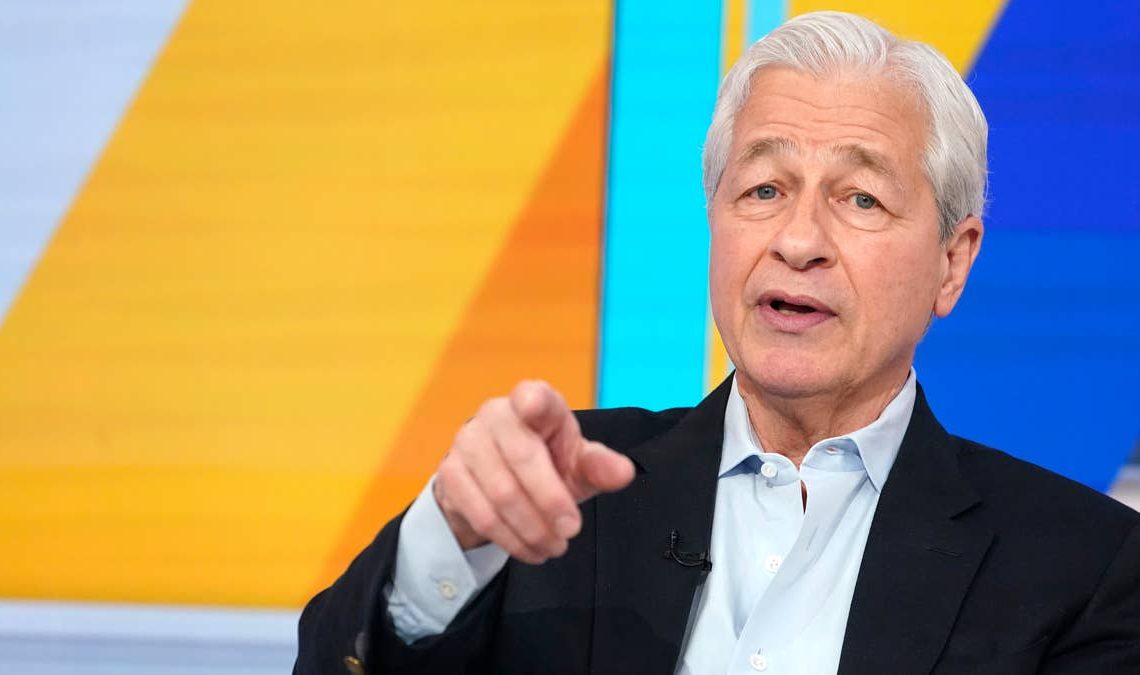
Jamie Dimon, the chief executive of JPMorgan Chase (JPM), reached for an unsettling image. “We’re in a bull market. It’s like a little tsunami. When that kind of thing happens, it’s very hard to stop,” he said during a discussion at the Council on Foreign Relations, according to Fortune.
Why Dimon is surprised the market is this calm
The surprise is the part worth sitting with. Dimon is not a man who spooks easily, and he runs an institution wired into nearly every corner of the financial system.
What unsettles him is the gap between the headlines and the tape. He pointed to Ukraine, Iran, oil, Russia and the United States’ relationship with China as forces that matter enormously for the free world, even if they are not denting the economy today, according to Fortune.
More Wall Street:
- Evercore sends strong message to stock market bears
- Wall Street’s top analysts just doubled down on 3 stocks
- Jim Cramer says Wall Street is one offering away from a hit
His longer worry is structural. Dimon described shifting “tectonic plates” under the economy, the kind of slow pressure that does not show up in a quarterly print but reshapes the ground over years.
Complacency is not a side effect of a long rally. In Dimon’s reading, it is closer to the main ingredient of the next downturn, the thing that lets risk pile up unseen until it lands all at once.
When I compare that read with the numbers Dimon himself cited, the tension is hard to miss. He acknowledged a genuine bull case, even as he flagged the danger.
Here is that case, in his own figures and the market’s.
- The S&P 500 closed above 7,600 for the first time on June 2, its highest level on record, according to CNBC.
- Artificial intelligence (AI) spending is on track for roughly $700 billion this year, Fortune indicated.
- Goldman Sachs (GS) lifted its year-end S&P 500 target to 8,000 from 7,600, according to Goldman Sachs.
- Unemployment is holding near 4.3%, and growth is running around 2%, Fortune reported.
John Lamparski / Getty Images
What Dimon’s “tsunami” warning means for your money
Strip away the metaphor and Dimon is making a point about momentum. A bull market, like a wave, gathers force the longer it runs, and that force is exactly what makes it hard to stop, and hard to step out of, before it turns.
For most readers, the wave is not abstract. It is your 401(k), your Roth, the index funds quietly compounding in the background of your life. The same momentum lifting those balances is the momentum Dimon is uneasy about.
Related: JP Morgan CEO has blunt inflation message
And here is the uncomfortable math. A narrow set of chip and AI names is doing most of the heavy lifting under this index, according to CNBC. If your retirement money sits in a broad market fund, you own more of that concentrated bet than you might think. The wave and your savings are riding the same current.
There is a second sting in the metaphor. The thing about a wave that is hard to stop is that it is also hard to get off. Most investors plan to sell near the top. Almost none of them do. By the time the danger is obvious, the exits are already crowded.
This is where the tsunami image earns its keep. A wave looks gentle from the beach. The danger is not the water you can see. It is the speed and the size you only register when it is already on top of you.
Dimon’s track record on market warnings
Skeptics have a fair counter. Dimon has sounded cautious before, and the market kept climbing anyway. He flagged a “hurricane” in 2022. He warned on bonds and credit through 2025, as highlighted by TheStreet. Each time, the rally outlasted the warning.
In my analysis, that history is a reason to listen more closely, not less. A man who has been early on risk for years, and watched markets shrug him off, is not fishing for attention by saying he is surprised. He is describing what he sees from a seat very few people occupy.
He has form here. Dimon is the executive who once told an earnings call that spotting one cockroach usually means there are more. The line drew eye rolls at the time. It aged better every time credit later wobbled.
It also fits a pattern. At the Reagan National Economic Forum in May, Dimon called the market “exuberant” without calling it a bubble, TheStreet reported.
He used nearly identical language in a Bloomberg interview last fall, calling the bull run unmistakable even as he flagged stretched valuations. He has been circling the same idea for months, sharpening it with each appearance.
How to read a market that won’t stop climbing
None of this is a sell signal, and Dimon did not offer one. He is not telling you to dump stocks or hide in cash. The economy he describes is not broken.
The tell is quieter. Even Goldman Sachs, while raising its target, noted that a sharp jump in momentum and unusually narrow market breadth are “emerging as cautionary signals,” according to Goldman Sachs. When the optimists and the skeptics start describing the same wave, the only argument left is about timing.
So the move is not to flee. It is to stop assuming the wave owes you a gentle exit. Look at how much of your portfolio rides on the same handful of AI names carrying this index. Decide now what you would do if the water pulled back, because the worst time to make that call is while it is happening.
The bull case has not vanished, and Dimon never said it had. Earnings have largely justified this climb, and plenty of strategists still see the index finishing the year higher. A wave can carry you a long way before it breaks. The point is simply to know that you are standing on one.
Dimon’s gift here is not a forecast. It is a vocabulary. The next time your account prints a fresh high and the world outside looks like it should not allow it, you will have a word for the feeling: tsunami.
Related: JP Morgan CEO has stark message for investors on stocks