
Anthropic’s (ANT) historic $81.3 billion Nasdaq debut hogged all the spotlight on Nov. 19, opening at $111.50, peaking at $115.10, and closing out its first session at $97.17, up 17.1% from its $83 offering price.
Yet as traders celebrated AI’s latest public juggernaut, SpaceX (SPCX) told a far more sobering story, dropping around 4% to close at $137.93 after touching $135.50, hovering just above its $135 June IPO price, Reuters noted.
That said, in a pointed Nov. 19 post on X, CNBC’s Jim Cramer sent a powerful signal to both Anthropic and SpaceX shareholders about why those two stocks are financially joined at the hip.
Behind all the IPO-related euphoria, Cramer revealed that billions of dollars from Anthropic’s fresh cash pile are going straight into Elon Musk’s space company.
That, in turn, is fueling a behind-the-scenes pricing battle between SpaceX and Nvidia (NVDA) to determine who might profit from the AI compute boom.
Cramer says Anthropic, Google fueling behind-the-scenes SpaceX-Nvidia battle
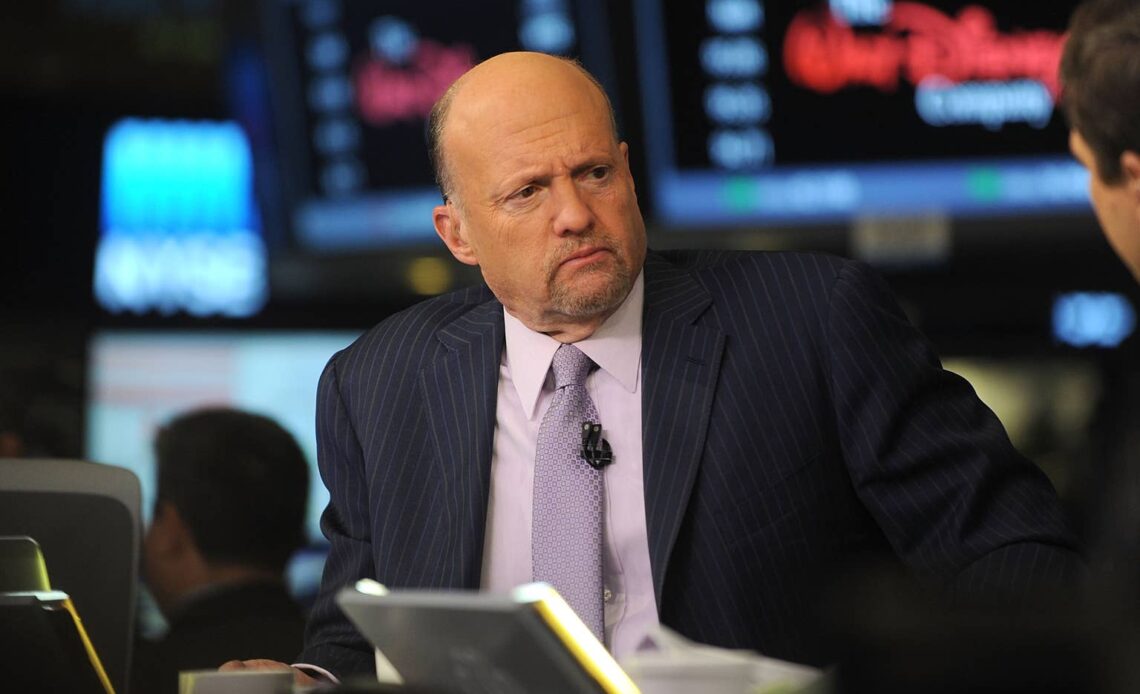
Cramer laid out the staggering cash flows that linked two of Silicon Valley’s biggest players in a post on X.
“Remember that a lot of that Anthropic money goes to SpaceX -$3.1 billion a month at full capacity for compute. (Google paying $900 m a month). That’s for SpaceX’s Nvidia chips,” Cramer wrote, before clarifying in a follow-up post that Alphabet’s Google is paying roughly $920 million a month. “I can’t blame @elonmusk for chastising Nvidia. Big Client. But also wants lower prices. That’s the real battle behind the scenes.”
More Jim Cramer:
- Jim Cramer sends clear signal on Apple and Palantir stock
- Jim Cramer explains the ‘AI cheat code’ driving Apple stock higher
- Cramer thinks Boeing’s problems aren’t going away soon, says buy GE
Securities filings confirm the immense scale of that pipeline.
Out of its total spending commitments disclosed in Anthropic’s amended S-1 prospectus, up to $120.5 billion is allocated to SpaceX’s SpaceXAI subsidiary through 2029, roughly $3.1 billion per month, or $37.2 billion annualized, once full contracted capacity comes online in December.
In addition, SpaceX’s Q3 10-Q already shows how critical that business has become.
Total sales surged 161% year over year to $14.58 billion, delivering $4.40 billion in net income, as AI compute ($7.56 billion) overtook Starlink ($5.25 billion). One unnamed AI client, “Customer B,” reported by Bloomberg to be Anthropic, supplied 34.5% of SpaceX’s Q3 sales, or roughly $5 billion.
That reliance explains Musk’s delicate dance with Nvidia.
Even after joining over 165,000 signatories on an open letter urging Nvidia’s board to reinstate former CEO Jensen Huang, Musk still has a ton of financial pressure to continue to squeeze Nvidia’s GPU pricing as SpaceX’s hardware expenditures rise exponentially.
Brad Barket / Getty Images
The $43 billion debt and 90-day exit clause SpaceX investors can’t ignore
Cramer’s focus on chip pricing exposes the weaknesses on SpaceX’s balance sheet.
SpaceX is borrowing heavily at high yields to continue funding its compute capacity for contracts that offer thin long-term guarantees.
Across the first nine months of 2026, SpaceX dropped $48.1 billion on capital expenditures against just $13.1 billion in operating cash flow, including $19.6 billion in Q3 capex alone. Management guided for Q4 spending to rise even higher to $35 billion to $40 billion.
To finance its Nvidia GPU expansion, SpaceX arranged a massive $43 billion off-balance-sheet debt package dubbed “Project Saturn,” featuring $25 billion in investment-grade bonds (rated A3 by Moody’s and A- by KBRA) priced around 8.3% and serviced by five-year chip lease payments through a special purpose entity, as reported by BigGo Finance.
Moreover, lenders wanted to keep SpaceX from sending the Nvidia chips they financed into orbit. If SpaceX stopped paying up, the chips would be nearly impossible to recover. SpaceX says the chips are for data centers on Earth, and it’s unclear whether the final deal included the restriction.
Anthropic’s updated IPO filing shows another difference.
Its cloud deals with Google ($121.3 billion), Amazon (at least $110 billion), and Microsoft (up to $49.2 billion) can’t be canceled unless there’s a serious breach. The SpaceX deal is more flexible, where either side can give 90 days’ notice, potentially as early as Feb. 1 or April 1, 2027.
What Cramer’s warning means for SpaceX and Anthropic stock investors now
For retail investors weighing investing in both mega-caps, Cramer’s post clarifies the exact risk-reward divide.
Anthropic’s $81.3 billion IPO, backed by $17 billion in Q3 sales, up 47% sequentially, virtually removes near-term counterparty risk, giving SpaceX shareholders confidence that those $3.1 billion monthly checks will clear once full capacity arrives in December.
For Anthropic investors, the 90-day exit clause provides valuable leverage to shift workloads if GPU rental rates fall or rival hyperscalers offer tighter pricing in 2027.
For SpaceX shareholders, however, the margin math is far less forgiving.
With $43 billion in Project Saturn financing carrying 8.3% bond yields and up to $40 billion in quarterly capex, SpaceX’s AI profitability is linked to whether Musk can force lower chip costs out of Nvidia, long before Anthropic’s 90-day exit window opens next spring.
Related: Morgan Stanley tweaks Nvidia price target after blowout earnings