
In my last three reports, I wrote about Berkshire Hathaway’s new Bending Spoons stake, its bigger Delta Air Lines position, and its near-doubling of Lennar. All came from the same Q3 13F filing. This one points the other way.
Berkshire Hathaway (BRK.A) (BRK.B) cut its Kroger (KR) holding to 35 million shares, worth $2.06 billion, from 39 million, according to its latest 13F filing. That is a trim of about 4 million shares, or roughly 10%.
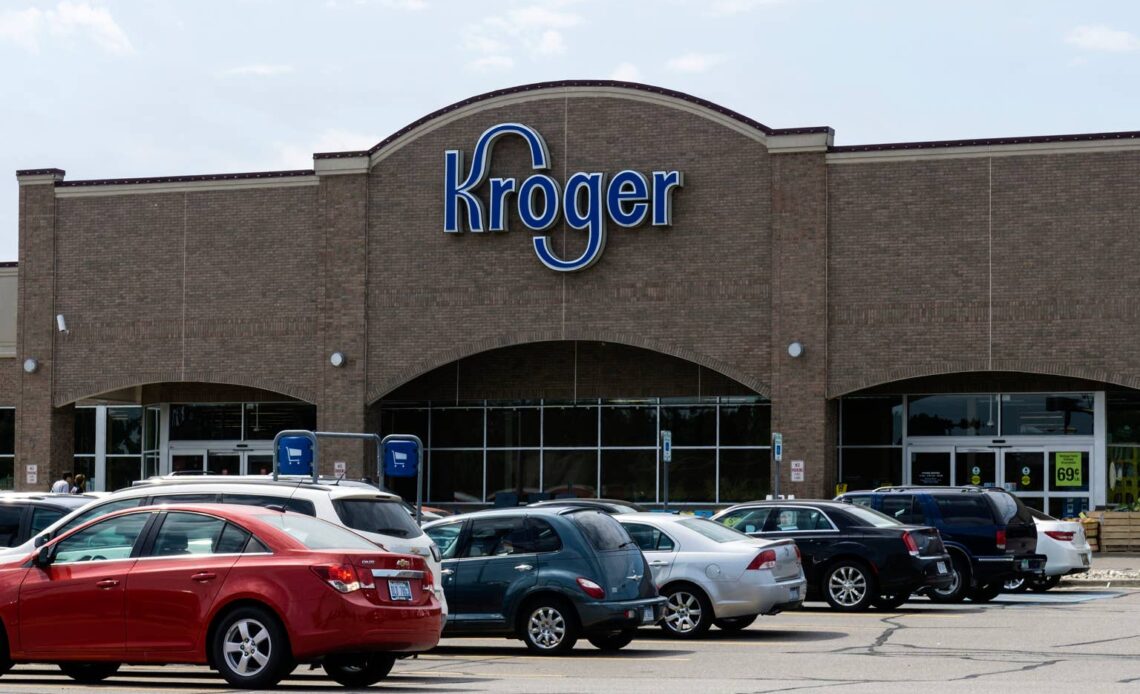
Founded in 1883 and with annual sales of over $132.5 billion, Kroger (KR) is one of America’s largest supermarket operators, serving more than 11 million customers daily through roughly 2,800 stores across 35 states. Beyond groceries, it sells household essentials, prescriptions, and fuel, and manufactures many of the food products on its shelves.
But notice Berkshire is still a very large Kroger shareholder. Selling some is not the same as leaving. Investors know that making money in the market is only half the job. Learn to pay yourself after a good investment.
Secure some profits, reward your discipline, and remember that not every dollar needs to go back into the market.
Also Read: Kroger plans 110 new stores, with major changes to what’s inside
What Berkshire trimmed in Kroger, and what it kept
Anyone who has watched Berkshire for years knows it rarely makes dramatic exits in one quarter.
A 10% reduction in a $2 billion position looks more like adjusting size than changing a view. The market rewards patience, yes, but wisdom is knowing when to take profits and pay yourself.
More Retail:
- Kroger cuts discounts, promises pricing changes
- Walmart gets aggressive when it comes to holiday sales
- Costco copies a popular Trader Joe’s collectible
KR traded at $69.79 on the morning of Nov. 18, slightly below its all-time intraday high of $76.58 set on March 12, 2026. The stock is up 14.41% year-to-date and 6.09% over the past 1 year, according to Yahoo Finance. Its three-year return is 75.89%.
My read is that after a strong multi-year run, taking a little from the table is a sensible move for a patient investor. 13F filings don’t state why companies sell their shares, so that is my interpretation, not Berkshire’s disclosed reason.
The grocery business is harder than it looks
Think about your last grocery run. Prices felt high, so you probably shopped around and may have switched to a cheaper brand. Kroger lives in that tension every day.
Kroger posted second-quarter identical sales (excluding fuel) growth of just 0.2% and narrowed its full-year range to 0.2%-0.8%, according to Kroger. Management said the range includes an approximate 140-basis-point headwind from the Inflation Reduction Act.
Related: Walmart shoppers must consider one major shift coming to prices
Margins are thin by design. That means a small change in costs or pricing can swing earnings. Even so, adjusted earnings per share grew 5% in the quarter, and the company reaffirmed full-year adjusted EPS guidance of $5.10-$5.30.
CEO Greg Foran said he is “pleased with the progress we are making” but added that “improving sales momentum remains a top priority.”
Kroger laid out a new plan in October
On Oct. 20, Kroger held its 2026 Investor Update in New York and set new long-term targets. Excluding Giant Eagle, it is aiming for:
- Comparable sales growth of about 3% in 2029
- Adjusted EBITDA growth of 3% to 6% a year from fiscal 2027 through 2029
- Adjusted EPS growth of 7% to 11% a year over the same period
The plan also calls for 1,000 new private-label items over three years — eight times the prior pace, according to TheStreet’s prior coverage— and about 110 new stores by 2029.
I like that the company now measures earnings growth alone. The old target of 8% to 11% total shareholder return included the dividend yield, which flattered the comparison. This one is stricter.
Digital is helping. Adjusted eCommerce sales rose 20% in the second quarter, and profit from its retail media arm, Kroger Precision Marketing, jumped 24%, according to Kroger’s Q2 fiscal 2026 earnings results.
RiverNorthPhotography / Getty Images
What Kroger numbers say about shareholder returns
Kroger pays a quarterly dividend of $0.39 per share, or $1.56 annualized, marking 20 straight years of increases. It repurchased $1.2 billion in stock in the first half and expects to finish the remaining $800 million of its $2 billion authorization by year-end.
Projected adjusted free cash flow is $2.7-$2.9 billion for fiscal 2026. Net debt to adjusted EBITDA is at 1.91 times, supporting an investment-grade rating, according to the company statement.
Away from that, Kroger ranked fourth in the National Retail Federation‘s 2026 Top 100 Retailers with $154.74 billion in sales, behind only Walmart, Amazon and Costco. Consumers also rank it fourth among the most popular grocery stores, with a 65% positive opinion in YouGov‘s grocery ratings.
Berkshire kept most of its position. The shares sit a touch below their high. A company with a clear plan, a solid balance sheet and a dividend streak is not an obvious sell. It may just be a stock that already had its easy gains, and Berkshire is not wrong to lock in some of its profits and leave the rest to run.
More Stocks News
- TJ Maxx CEO sees a different side of America’s two-speed economy
- Annuities should replace your bonds, not your stocks
- Target shoppers may notice a big change this holiday season
- Roblox CFO admits ‘limited data’ on GTA 6 as BofA urges patience